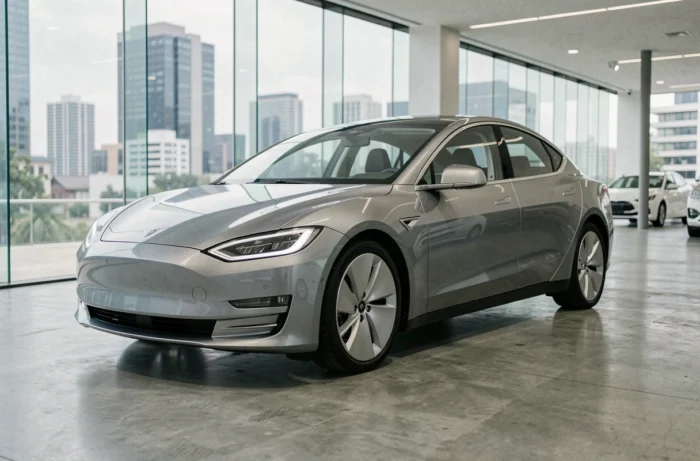
Electrified powertrains (simple hybrids, plug-in hybrids, and 100% battery) now account for nearly 70% of new car registrations in the European Union in the first half of 2026. Combined petrol and diesel have fallen below 30%. This shift is redefining industrial strategies, pricing structures, and the way we evaluate a new vehicle.
Automotive Energy Mix 2026: The Coexistence of Electrified Powertrains
Reducing the market transformation to a thermal versus electric duel ignores the reality of the current mix. Non-rechargeable hybrids hold the top spot in sales in Europe, ahead of BEVs and far ahead of diesel. This dominance is explained by a lower entry price compared to fully electric vehicles, a lack of anxiety regarding range, and an after-sales network identical to that of thermal vehicles.
BEVs are experiencing strong growth, with a 127% increase in registrations in France in July 2026 (44,378 units, or 35% of the French monthly market). However, we observe that this growth does not cannibalize hybrids: both technologies are gaining market share from pure thermal vehicles, according to parallel dynamics.
For buyers comparing available models in 2026, it is possible to visit the Motor X Club website to explore technical sheets by powertrain and segment.
The industrial logic has changed. Renault, Stellantis, and Volkswagen are now launching each new model in at least three variants (hybrid, plug-in hybrid, electric). The pure thermal vehicle is gradually disappearing from the catalogs of European manufacturers, sometimes replaced by a mild-hybrid 48V version that allows them to stay below regulatory emission thresholds.
New Car Brands in France: Five Chinese Manufacturers in Six Months
The first half of 2026 saw the arrival of five new Chinese brands in the French market. Never before had so many manufacturers from China launched their commercial networks in such a short time. This acceleration coincides with the Beijing auto show, which served as a launch pad for ranges tailored to European prices and expectations.
The Chinese offensive targets the compact electric SUV segment, where demand is highest and where historical brands struggle to offer models below the psychological price barrier that attracts first-time electric buyers. The phenomenon goes beyond simple price competition: these manufacturers arrive with integrated software architectures and development cycles that are twice as short as the European average.
For French groups, the response involves models with strong symbolic value. Renault is banking on the Renault 5 E-Tech, whose nostalgic positioning and contained price make it the star of French electric sales. Volkswagen counters with the ID.Polo, which embraces its stylistic kinship with thermal models to reassure a clientele accustomed to the brand.
Satisfaction of Electric Vehicle Owners: Almost No Return to Thermal
The latest data on customer satisfaction overturns a persistent narrative. Only 1% of electric vehicle owners are considering a return to petrol, down from 21% in 2025. This spectacular drop in one year is explained by three converging factors:
- The improvement in the real range of new models, which reduces the gap between manufacturer promises and daily use
- The densification of the fast charging network, although public charging remains the main point of friction cited by users
- The driving pleasure, which a recent study places at the same level, or even above, that experienced behind the wheel of an equivalent thermal vehicle
The overall satisfaction rate reaches 93% among electric vehicle owners in France. This figure carries significant weight in purchasing decisions: the positive word-of-mouth from early adopters accelerates the conversion of the undecided.
Ecological Tax and Prices of New Vehicles: What Changes for Buyers
The tightening of the ecological tax in 2026 profoundly alters the financial equation of a car purchase. The triggering thresholds have been further lowered, and the weight tax is added to the CO2 tax for the heaviest vehicles. In practice, a thermal segment C SUV can now incur several thousand euros in cumulative taxes at the time of registration.
This tax pressure pushes manufacturers to lighten their models and multiply hybrid variants. It also directs corporate fleets towards electric vehicles, a movement amplified by tax advantages for low-emission vehicles.
- The CO2 tax affects an increasing number of petrol and diesel models each year
- The weight tax specifically penalizes large SUVs and high-end thermal sedans
- 100% electric vehicles and most plug-in hybrids remain exempt from both taxes
For buyers, the comparison is no longer limited to the catalog price. The total cost of ownership now includes green taxation as a determining variable, sometimes more impactful than depreciation or maintenance costs over five years.
Software Defined Vehicle: The Trend Redefining the Value of an Automobile
The concept of a Software Defined Vehicle (SDV) is establishing itself as the structuring axis of automotive innovations in 2026. The principle: a centralized electronic architecture allows for remote updates of vehicle functions, activation of options after purchase, and correction of dynamic behaviors without a workshop visit.
This approach transforms the relationship between manufacturer and customer. A model purchased in 2026 can see its performance, driver interface, or driving aids evolve throughout its lifespan. The residual value of a vehicle increasingly depends on its ability to receive updates, and not solely on its mileage or mechanical condition.
The French automotive market, with its 126,808 registrations in July 2026 (including 9% growth compared to the previous year), confirms that these trends are not theoretical projections. They are already shaping buyer choices, manufacturer strategies, and price evolution across all segments.