A tile that absorbs water instead of repelling it compromises the entire roof-structure-insulation complex. Identifying the porosity of tiles before it causes visible infiltrations on the underside helps avoid costly repairs to the structure and preserves the thermal performance of the building.
Drone and thermal camera diagnosis: locate porosity without climbing onto the roof
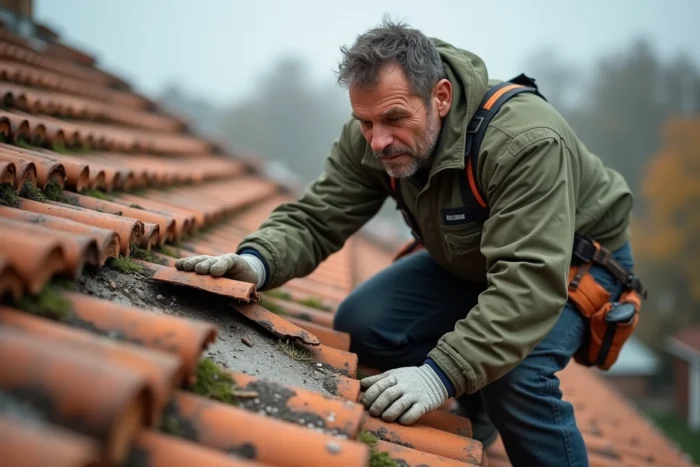
Visual inspection from the ground or by ladder remains approximate. We have observed a growing adoption of drones equipped with high-resolution sensors in recent years to map areas of thick moss, micro-cracks, and tiles showing abnormal water retention on the surface.
The drone allows for complete coverage of the roofing in a single pass, including edges, valleys, and ridges that are difficult to access. High-definition images reveal details invisible to the naked eye from the ground: flaking of the coating, network of hairline cracks, localized discoloration indicating chronic saturation.
The thermal camera complementary to the drone provides an additional layer of information. A tile saturated with moisture has a cooler thermal signature than its healthy neighbors, allowing for precise delineation of porous areas. This approach, documented by several specialized roofers, reduces the time spent on the roof and limits the risk of breaking fragile tiles under the weight of an operator.
For those who want to learn more about Toute La Maison, this preliminary diagnosis is the first recommended step before any treatment or replacement decision.
Water droplet test on tile: reliable field protocol
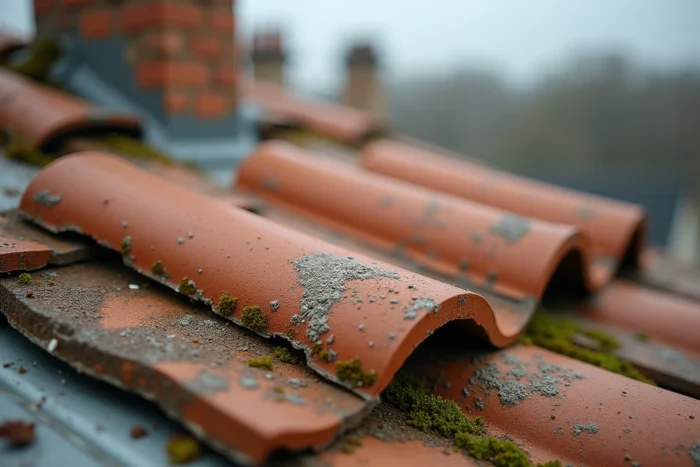
When a tile is accessible (edge tile removed, tile recovered during a spot replacement), the water droplet absorption test remains the most telling diagnosis. We recommend working on the exterior face exposed to the elements, not on the interior face protected by the batten.
Absorption test protocol
- Drop a few droplets of water on the exterior surface of the tile, in an area free of moss or lichen. A healthy tile repels water that beads on the surface without penetrating
- Observe the behavior for one to two minutes. If the water is absorbed and a dark spot appears, the tile has lost its surface waterproofing
- Repeat the test on several tiles taken from different locations on the slope, as porosity is not uniform: northern areas and lower slopes degrade faster
This test does not replace a complete diagnosis, but it quickly confirms or refutes a doubt. A tile that absorbs the droplet in less than thirty seconds shows advanced porosity.
Differentiating porosity and condensation on the underside
A common trap is to confuse visible moisture under the tiles with porosity. Condensation on the underside appears in cold weather on perfectly healthy tiles, simply due to a ventilation defect in the roofing. A wet tile on the underside is not necessarily porous. The water droplet test on the exterior face settles the debate.
Impact of porosity on insulation and heating bills
Articles on porous tiles generally focus on the risk of visible infiltration (stain on the ceiling, water dripping). The most costly damage is often invisible: the gradual degradation of the insulation under the roof due to moisture retention.
A porous tile does not always lead to a trickle of water. It may simply allow moisture to migrate by capillarity to the batten, then to the rain barrier, and finally to the insulation. Mineral wool insulation that absorbs a few points of moisture loses a significant portion of its thermal resistance. The result: an increase in the heating bill without an apparent cause.
We regularly observe attics where the insulation appears dry on the surface but reveals, once lifted, a lower layer moist in contact with the ceiling. This silent degradation can last several years before a clear infiltration triggers the alert.
Waterproofing treatment or replacement: concrete decision criteria
The waterproofing treatment only makes sense if the tile still retains its mechanical cohesion. A tile that crumbles when touched, sounds hollow when tapped, or shows frost flakes on the surface has surpassed the stage of treatment. In this case, only replacement is relevant.
When waterproofing treatment is sufficient
If the water droplet test shows slow absorption (more than a minute), that the tile shows no clear cracks or flaking, and that the roofing has been properly mossed beforehand, a surface waterproofing applied by low-pressure sprayer can extend the lifespan of the roofing by several years.
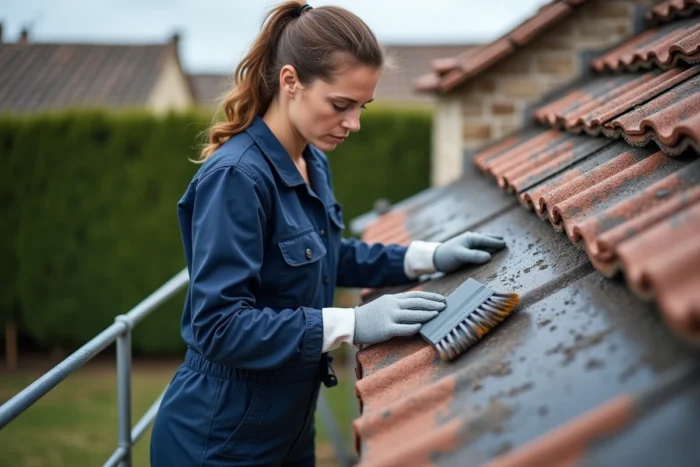
Prior moss removal conditions the effectiveness of the treatment. A waterproofing applied over a layer of moss does not penetrate the tile. Cleaning must be done at low pressure to avoid accelerating the erosion of the remaining coating. The use of bleach is to be avoided: it destroys surface microorganisms but chemically attacks the terracotta and worsens porosity in the medium term.
When replacement is necessary
- Near-instantaneous absorption of water in the droplet test, with a deep dark stain
- Tiles that break during handling or show delamination due to freeze-thaw cycles
- Moss rooted in the mass of the tile, not just on the surface
- Porosity affecting more than one-third of the slope, making spot treatment economically absurd compared to partial refurbishment
Partial replacement with coherent panels (replacing a complete strip rather than isolated tiles) ensures better sealing homogeneity and avoids misalignment of the batten between new and old tiles.
Regular roof maintenance, with moss removal every three to five years depending on exposure and vegetation, remains the most effective lever to delay the appearance of porosity. Waiting for the first signs of moisture on the ceiling means intervening too late on the insulation.