
Aliou Mara is a Senegalese entrepreneur whose name frequently appears in searches related to Africa’s wealthiest individuals and the Crespo-Mara family. The wealth estimates attributed to him online hover around several million euros. However, none of these estimates are based on verifiable documents: no published company accounts, no consulted real estate records, nor any official wealth declarations.
Aliou Mara’s Wealth: Why Online Figures Are Unreliable
Most sites displaying an estimate of Aliou Mara’s wealth repeat the same order of magnitude without ever citing a primary source. The amounts circulate from one article to another through mere repetition, without any company registry, land registry, or balance sheet being consulted to support them.
This ambiguity is not unique to Aliou Mara. It reflects a common mechanism on “celebrity wealth” specialized sites: estimates rely on extrapolations between competing sites, not on actual financial data. A figure published on one site is picked up by a second, then a third, giving it an appearance of consensus when it has only one unverified source.
To better understand this phenomenon and the verifiable elements that exist about this entrepreneur, Aliou Mara’s journey on Terre Finance details the possible overlaps between known professional activities and estimated income levels.
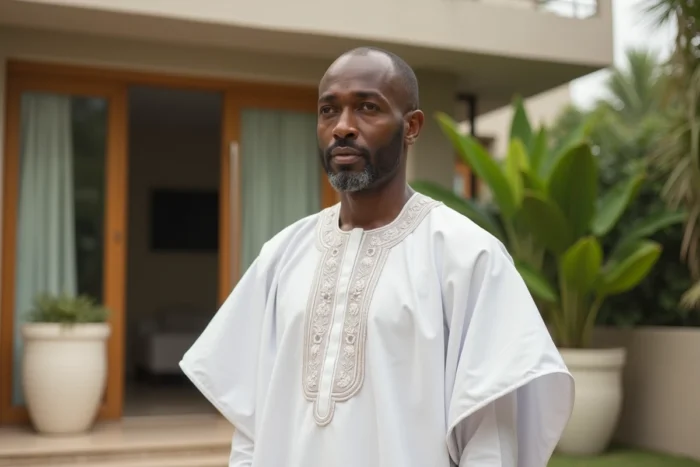
Aliou Mara and the APIX: A Position That Escapes Wealth Transparency
One element rarely mentioned by competing articles concerns the regulatory framework surrounding this type of profile. Aliou Mara has held positions related to Special Economic Zones within the APIX, the Senegalese investment promotion agency.
In France as in Senegal, leaders of public agencies are not subject to the wealth declaration obligations that apply to ministers or elected officials. This legal distinction creates a gray area around the income and holdings of these officials. Unlike a member of parliament whose declarations of interest are accessible, a senior official of a public agency can hold stakes in private companies without this being made public.
This structural opacity partly explains why searches on Aliou Mara’s wealth consistently lead to vague and contradictory ranges. The available data do not allow for a precise conclusion, and any confidently asserted estimate should be approached with caution.
Family Life and Ties with Audrey Crespo-Mara and Sékou Mara
Public interest in Aliou Mara has been amplified by two media figures in his family. Audrey Crespo-Mara, a well-known television journalist in France, is his wife. Sékou Mara, a professional footballer playing at a high level, is his son.
Another family member, Lamine, is training at one of the most prestigious hotel schools in the world, with a program costing around 190,000 euros. This detail, documented by the French celebrity press, provides an indirect glimpse into the family’s standard of living without constituting proof of overall wealth.
- Audrey Crespo-Mara has her own income as a journalist and presenter, making it difficult to attribute the family’s lifestyle solely to Aliou Mara’s wealth
- Sékou Mara receives a salary as a professional footballer, an income distinct from his father’s wealth
- The costly educational choices for the couple’s children indicate high purchasing power, but do not quantify a fortune
A Man Who Remains Distant from the Media
Aliou Mara does not grant interviews. He has no public profile on known professional social networks. This discretion, which contrasts with the visibility of his wife and son, paradoxically fuels internet users’ curiosity. The less he communicates, the more speculation increases.

Senegalese Entrepreneur in France: The Limits of What Can Be Verified
Existing articles present Aliou Mara as an active investor in several sectors. Some mention real estate, others financial services or international trade. None of these activities have been confirmed by public documents such as Kbis extracts, filed balance sheets, or company registers.
This impossibility of verification does not mean that the described activities are fictitious. It means that the reader seeking to form a precise idea of Aliou Mara’s entrepreneurial journey encounters a documentary wall. Field reports diverge on this point: some sources describe him as a leading investor, while others depict him as a businessman whose scale remains modest compared to the African fortunes listed by specialized rankings.
The major wealth rankings, such as the one published annually by Challenges in France, do not mention Aliou Mara. This absence does not settle the debate, as these rankings have high entry thresholds and focus on documented wealth.
What the Necessary Caution Reveals
The case of Aliou Mara illustrates a broader phenomenon: the creation of financial notoriety through the accumulation of unsourced content. A name associated with a round figure, repeated often enough, eventually acquires a credibility that the facts do not always support.
For a reader wishing to understand the reality of Aliou Mara’s journey, the most reliable approach remains to distinguish what is documented (his family ties, his time at the APIX, the careers of his relatives) from what is extrapolated (the exact amount of his wealth, the list of his investments). This distinction, seemingly simple, is absent from almost all published content on the subject.