Switzerland has one of the highest life expectancies in the world. The healthcare system is efficient, but individual preventive habits vary from one resident to another. Daily health in Switzerland relies on a balance that everyone must actively build.
Mental health in Switzerland: a pillar to integrate into daily habits
Content on prevention in Switzerland often addresses diet, sports, or sleep. Mental health is part of the same daily preventive actions, but it is less frequently discussed from this perspective.
Promotion Santé Suisse has launched the project SuiT, a national digital toolkit for suicide prevention. This initiative brings together approaches already tested in several cantons and aims for a significant reduction in suicidal acts. It is aimed at the general public and loved ones, not just healthcare professionals.
Among the accessible resources are La Main Tendue (143), Pro Juventute (147), and online platforms like parler-peut-sauver.ch or Santépsy.ch. These tools already exist, but their grouping within a structured national framework changes the game for those seeking help quickly. Additional information on prevention and well-being is available at https://santepratique.ch/, which covers several dimensions of health in Switzerland.
Caring for one’s mental health daily is not limited to managing work stress. Recognizing warning signs in oneself or a loved one, knowing emergency numbers, daring to talk about it: these reflexes are as much about prevention as eating five fruits and vegetables a day.

Nutrition and disease prevention: what Swiss research recommends
The Federal Office of Public Health (OFSP) and Unisanté agree on one point: favor foods of plant origin, minimally processed, seasonal, and local. This recommendation goes beyond simple dietary advice. It is part of the national strategy for the prevention of non-communicable diseases, targeting cardiovascular diseases, diabetes, and certain cancers.
Unisanté emphasizes an often underestimated aspect: cooking for oneself reduces the consumption of salt, added sugars, and saturated fats much more effectively than a restrictive diet. Eating on the go does not necessarily mean eating poorly, as long as meals are prepared in advance.
Concrete guidelines for daily life
- Reduce meat consumption to two or three times a week, benefiting the budget, health, and the environment
- Vary protein sources by incorporating legumes and whole grains, which provide fiber and micronutrients
- Limit alcohol and eliminate tobacco, two major risk factors identified by the OFSP in its prevention strategy
These recommendations may seem nothing new at first glance. However, their integration into a coordinated public policy at the federal level gives them a different weight: food prevention is now a national strategic axis, not just a magazine tip.
Physical activity and sleep: two pillars often wrongly dissociated
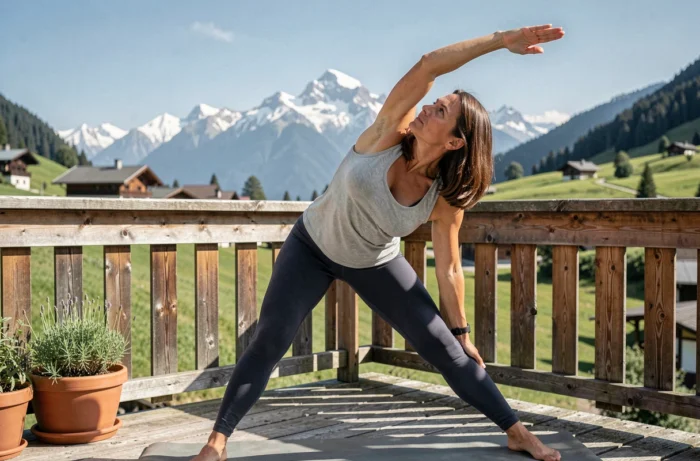
Moving does not mean doing sports. This distinction, articulated by Unisanté, deserves to be taken seriously. Walking for thirty minutes, taking the stairs, gardening: physical activity integrated into daily life produces measurable effects on the prevention of chronic diseases.
Sleep, on the other hand, remains the neglected aspect of prevention in Switzerland. Needs vary greatly depending on age and lifestyle, making any uniform hourly recommendation less relevant. What is documented is the link between chronic sleep debt and increased risk of cardiovascular diseases.
A common trap is to compensate for a lack of sleep with intense physical activity, or vice versa. These two pillars work in complementarity: an active body sleeps better, and a rested body moves more willingly. Separating them in the daily management of one’s health amounts to treating symptoms without understanding the mechanism.
Integrating movement without disrupting one’s schedule
Switzerland offers a geographical framework conducive to daily physical activity. Marked hiking trails, cycling infrastructure, public transport that encourages walking: the Swiss living environment facilitates physical activity without major organizational effort.
For sedentary individuals, the first realistic goal is not to run a half-marathon. It is to identify times of the day when movement can replace immobility: commuting, lunchtime, short trips.
Health insurance and prevention: a system struggling to reimburse preventive actions
The Swiss health insurance system extensively covers curative care. Prevention, however, remains largely the responsibility of the insured. Recommended vaccinations and certain screenings are covered, but general preventive consultations are not systematically reimbursed by basic insurance.
This situation creates a paradox. The Confederation invests in national strategies for the prevention of non-communicable diseases, but individual funding for prevention largely relies on supplementary insurances, whose coverage varies significantly from one insurer to another.
- Check each year the preventive services included in your supplementary insurance contract
- Inquire with your canton about free screening programs (breast cancer, colorectal cancer depending on the cantons)
- Take advantage of health promotion offers provided by municipalities, often little known but free
Several cantons are currently developing community health promotion projects, as indicated by recent initiatives in the canton of Neuchâtel. These local programs complement federal action and deserve to be explored by every resident.
Daily health in Switzerland is not just a list of good behaviors. It also depends on the ability to navigate a complex system where prevention and curative care do not receive the same level of coverage. Knowing one’s rights, using existing cantonal and federal resources, and gradually adjusting habits remains the most accessible lever for every resident.