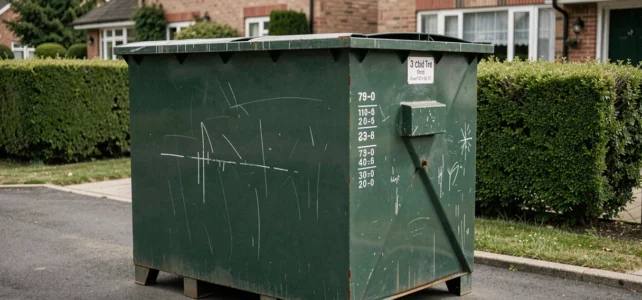
The term “3m³ container” is commonly found in construction quotes, skip rental catalogs, and storage box product sheets. Behind this short name lie at least two distinct realities: the waste collection skip with a nominal volume of three cubic meters, and the removable storage box with a length of three meters. This confusion, perpetuated by vague commercial names, complicates the choice for both individuals and craftsmen.
3 m³ container or 3 m container: two pieces of equipment, two uses
On the ground, a “3 m³ container” most often refers to a waste collection skip. This open box, delivered by a crane truck, receives rubble, mixed waste, or green waste during light renovation work. Its nominal volume is 3 m³, but its load capacity can reach around three tons of materials depending on the density of the contents.
The “3 m container,” on the other hand, is a removable steel storage box, often galvanized, with an OSB floor. Its exterior length is approximately three meters, but its standard width and height give it a much larger interior volume, around ten to twelve cubic meters. It is a completely different product: closed, secure, designed to store furniture, belongings, or professional equipment for a longer duration.
Before placing any order, it is essential to clarify this point: are you looking to dispose of waste or to store goods? Understanding the dimensions and capacity of a 3m³ container first requires knowing which type of equipment is being discussed.
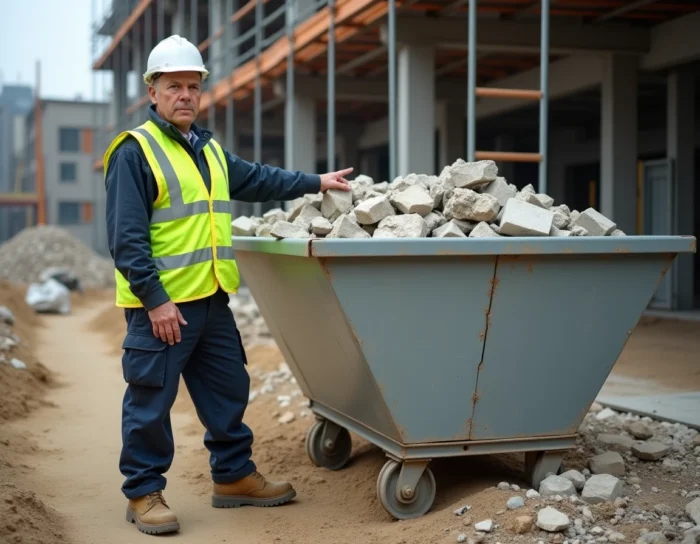
3 m³ skip for waste: actual dimensions and loading limits
The 3 m³ skip is the smallest size offered by most specialized waste collection rental companies. Its dimensions vary slightly from one provider to another, but the overall size remains compact, designed to fit into a residential driveway or on a sidewalk with street permission.
Its main advantage is its maneuverability. However, three cubic meters fill up quickly, especially with heavy materials like concrete rubble or tiles. The weight limit (generally around three tons) is often reached before the volume is fully occupied.
What can actually be put in it
- Rubble from a small interior demolition (partition, bathroom), provided the maximum load allowed by the rental company is not exceeded
- Voluminous but light green waste: branches, trimmed hedges, moderate amounts of topsoil
- Mixed waste from moving or house clearance, as long as the waste categories are not mixed if the provider requires sorting
For a complete renovation of a room, the 3 m³ skip is rarely sufficient. Field reports vary on this point, but several work guides recommend moving up to the larger size as soon as the renovated area exceeds a few square meters.
3 m removable storage box: actual capacity and installation conditions
The three-meter-long removable box is a very different product from the skip. Made of galvanized steel with a reinforced floor, it offers a usable volume of around ten to twelve cubic meters. This capacity allows for the storage of the contents of a studio or a small two-room apartment: furniture, boxes, appliances.
Its ground area, around five to six square meters, has a direct regulatory consequence. For very small installations (less than five square meters) and for a duration of less than three months, no urban planning permission is required in most municipalities. Beyond this area or duration, a prior declaration of work may be required.
Criteria for choosing a temporary storage box
The first criterion is the nature of the ground. A steel box placed on soft or sloping terrain may deform. A stabilized ground, or even a concrete slab, extends the lifespan of the floor and prevents leaks.
The second criterion concerns ventilation. A closed container without ventilation generates condensation, particularly during periods of thermal variation. To store furniture or items sensitive to humidity, check for the presence of ventilation grids or plan for moisture absorbers.

3 m³ container and transport: this format has nothing to do with maritime containers
Standardized maritime containers (ISO 668 standard) start at the 8-foot size, which has a volume of about ten cubic meters. The smallest commonly marketed size, the 6-foot container, already offers a usable volume of around seven cubic meters. No standard maritime container corresponds to a volume of 3 m³.
This distinction is important, as online searches often mix the two worlds. A 20-foot maritime container offers a volume of about 33 m³, while a 40-foot container reaches 67 m³. The “3 m³” belongs to a different category: that of construction skips or non-ISO standardized storage boxes.
For the transport of goods over long distances, the 3 m³ format simply does not exist in the maritime logistics chain. 3 m³ cargo vans provide a road alternative for small volumes, but their uses (urban delivery, partial moving) do not overlap with those of a fixed container.
Choosing between a 3 m³ skip for waste disposal and a 3 m long removable box for storing belongings is like comparing two tools that do not answer the same question. The identical nominal volume masks differences in actual capacity, regulation, and cost. Checking the exact interior dimensions with the supplier remains the only reliable way to optimize loading, whether with rubble or moving boxes.