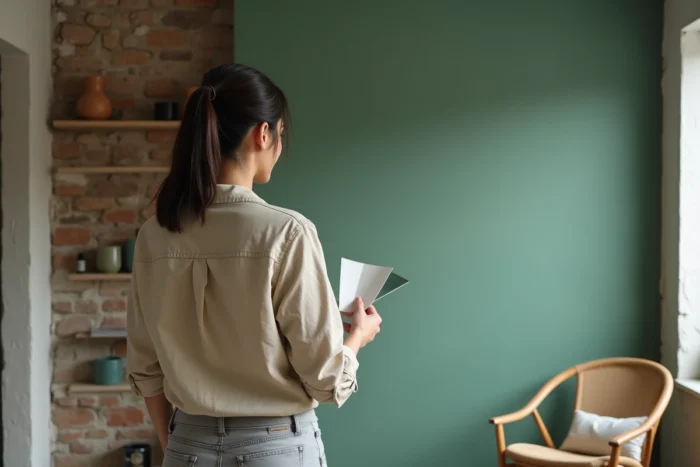
Transforming a house into a modern space is not about ticking off a trends catalog. The starting point is a technical reading of what already exists: volumes, light circulation, materials in place. Every transformation decision should stem from this analysis, not from an isolated aesthetic desire. Here are the concrete levers that allow for the creation of an interior that is both unique and coherent.
Modular furniture: rethinking the layout without tearing everything down
The first instinct to modernize an interior often involves replacing furniture. The most effective approach is different: choosing furniture that reconfigures according to use. A modular sofa, nesting tables, or a foldable desk allow a room to evolve without renovations.
This principle of modularity responds to a real change in the way we live. The living room serves as an office during the day, and the dining room becomes a play area on weekends. Fixed furniture creates friction in these transitions. Movable and reconfigurable elements absorb these changes in use without the space losing its visual coherence.
To explore concrete approaches to interior design, you can consult the Mindtrap website, which gathers resources on the subject.
The choice of modular also affects the longevity of the decor. A flexible layout ages better than a decor fixed around a specific trend. Instead of redecorating your living room every three years, you reorganize the volumes by moving a few elements.
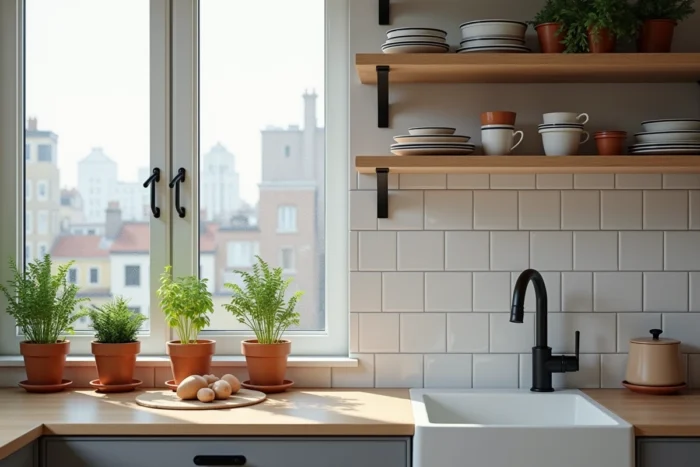
Relief wall decoration: going beyond frames and posters
Wall decoration is undergoing a technical transformation. Framed posters and printed canvases are giving way to solutions that play with relief and natural materials. Sculpted wood panels, terracotta compositions, wall screens, woven macramé textiles: the wall becomes a tactile surface, not just a visual one.
This approach measurably changes the perception of a room. A textured wall absorbs light differently depending on the time of day, creating variations in ambiance without intervention. A raw wood panel placed behind a sofa adds depth that no solid paint can produce.
Materials to favor for a relief wall
- Raw or recycled wood, in staggered planks or perforated panels, adds warmth and structure to an overly smooth wall
- Raw earth or lime, applied as a thick coating, creates texture variations that evolve with natural light
- Dried or stabilized plant elements, fixed in wall compositions, introduce an organic dimension without maintenance
- Patinated metal or brushed brass, in small decorative pieces, adds an industrial contrast to a warm interior
The idea is not to cover every wall. One wall treated in relief is enough to transform the perception of an entire room. The rest can remain understated, in a solid color, to allow the whole to breathe.
Continuity between indoor and outdoor: the terrace as a room in its own right
Treating the terrace or garden as a decorative extension of the house is a transformation lever often underutilized. The approach involves applying the same interior design principles to the outdoor space: coherent color palette, material plan, and defined living areas.
Concretely, this means choosing colors and textures for the terrace that dialogue with the adjacent living room or kitchen. If your interior uses light wood and sandy tones, the exterior can echo these shades in garden furniture, cushions, and flooring.

Continuity also extends to flooring materials. An indoor tile that continues outdoors (with a non-slip treatment) visually erases the boundary between inside and outside. This type of choice has a much stronger impact on the feeling of space than a real expansion of a few square meters.
Craftsmanship and custom-made: what makes an interior truly unique
Modernity in decor is not measured by the cutting-edge nature of an object. It lies in the ability of an interior to tell something specific. This is where craftsmanship and custom-made become markers of uniqueness.
A piece of furniture made by a local artisan, a shelf designed specifically for an atypical corner, a ceramic door handle produced in small batches: these elements are not found at your neighbor’s. They provide what industrial furniture cannot offer: a verifiable story and palpable quality of finish.
Where to place custom-made for maximum effect
Custom-made has the most impact in transition areas and focal points. A built-in bookshelf in a hallway, a sink countertop carved from local stone, a pendant light made by a blacksmith: these pieces draw the eye without overcrowding the space.
The approach of reasonable custom-made involves concentrating investment on two or three visible pieces rather than having everything custom-made. The rest of the furniture can be standard without losing the overall character. It is the contrast between artisanal pieces and common objects that creates the personality of an interior.
- Prioritize custom-made in the entryway and living room, the first areas seen by a visitor
- Choose durable and repairable materials for these pieces, justifying the long-term investment
- Ask the artisan for a sketch or prototype before production to validate proportions in the actual space
A modern and unique interior is not built by stacking decorative purchases. It results from precise technical choices: furniture that adapts to real life, walls that play with light, an exterior designed as a room, and a few handcrafted objects that anchor the whole in a unique identity. The most effective approach is to start with one of these levers, apply it correctly, and then move on to the next one.