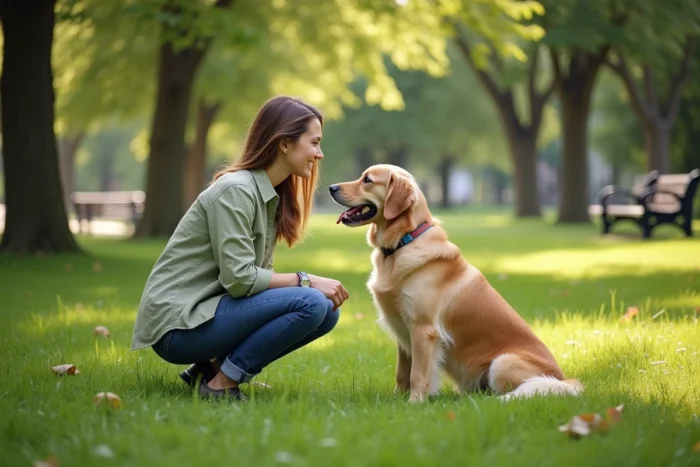
A dog that freezes in place during a walk, growls at a calm fellow dog, or systematically destroys its environment in the absence of its owner does not present an obedience problem. It expresses an emotional imbalance that the repetition of commands will not resolve. Understanding this distinction radically changes the way we accompany a dog on a daily basis.
Trauma-informed dog training: starting from the dog’s experience before the protocol
The trauma-informed approach, which is gaining traction among dog trainers in 2026, overturns traditional logic. Instead of making a quick behavioral diagnosis (“dominant,” “stubborn,” “poorly socialized”) and then applying a standard protocol, it requires prior observational work: identifying triggers, measuring recovery time, and reading the dog’s body language before any intervention.
We observe that dogs from shelters, legal seizures, or simply unstable environments react very differently to the same stimulus depending on their history. An Australian shepherd adopted at three years old after two changes of home does not behave like a puppy of the same age raised in a stable environment, even if both show reactivity on a leash.
The behavioral sheets filled out by the Animal News website dedicated to dogs allow tracking the evolution of these profiles over the months, aligning with this logic of individual traceability.
Emotional regulation before obedience
The classic reflex in response to a reactive dog is to multiply obedience exercises: sit, lie down, recall under distraction. This is counterproductive when the animal’s nervous system is overloaded. A dog in a state of chronic stress cannot learn, its prefrontal cortex is short-circuited by the amygdala.
Professionals now recommend working first on emotional regulation: predictable routines, reducing stimuli in the immediate environment, decompression spaces after outings, and managing sleep. A dog that sleeps poorly or not enough remains in a state of hypervigilance.
Socialization of the adult dog: what changes compared to the puppy
The primary socialization window for puppies is between three and fourteen weeks. After this stage, social learning remains possible, but the neurological mechanisms differ. The adult dog no longer discovers: it reevaluates associations that are already ingrained, often negative.
In practical terms, exposing a fearful adult dog to a group of peers in the hope that it will “get used to” them reproduces exactly the pattern that has failed. Gradual desensitization works better:
- Present the stimulus at a sufficient distance for the dog to observe without reacting, then reward calmness
- Reduce the distance in increments over several sessions, respecting the individual tolerance threshold
- Alternate contexts (location, time, intensity of the stimulus) to generalize learning without overwhelming the animal
This work takes weeks, sometimes months. Progress is measured by recovery time, not by the number of commands executed.
Agility as a tool for indirect socialization
Some trainers use agility not as a sport discipline, but as a means of indirect socialization. The dog works near other animals without forced interaction, in a structured setting where attention is directed towards physical obstacles. This approach reduces social pressure while creating positive associations with the presence of peers.
European regulations and dog breed selection: what changes
The new European rules now explicitly target the selection of extreme physical characteristics in dogs when they lead to health problems. This issue goes beyond mere welfare to challenge certain breeding practices that produce structurally fragile animals.
These regulations also impose outdoor spaces in certain establishments and specific training for at least one person in pet shops, breeding facilities, and shelters. For owners, this means that the choice of a breed can no longer be made solely based on aesthetic or trendy criteria.
- Check that the breeder complies with the new welfare standards (spaces, veterinary follow-up, genetic testing)
- Prefer lines selected for functional health rather than extreme morphological conformity
- Research behavioral predispositions related to the breed before acquisition, not after
- Require a documented socialization record for any puppy purchased from a breeder
A brachycephalic dog selected for an increasingly shorter muzzle or a German shepherd whose back angulation compromises locomotion are not neutral choices. The regulatory framework is catching up with what ethics should have imposed long ago.
Dog walking and mental stimulation: rethinking the daily outing
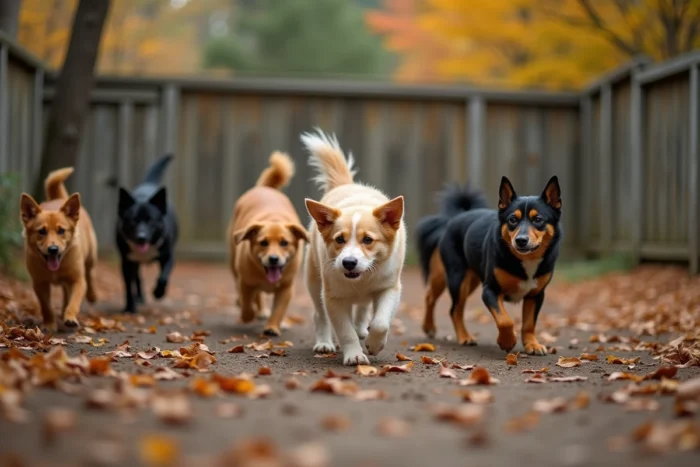
The walk remains the primary lever for a dog’s well-being, but its quality matters more than its duration. A twenty-minute walk with free olfactory exploration in a calm environment benefits an anxious dog more than an hour of walking on a short leash on a noisy sidewalk.
We recommend distinguishing three types of outings: the hygienic walk (short, functional), the exploratory walk (the dog chooses the pace and stops), and the working outing (exercises, recall, controlled socialization). Mixing these objectives in a single outing cognitively overloads the animal.
Adapting the outing to the emotional profile
For a dog undergoing behavioral rehabilitation, choosing the time and place of the walk is part of the protocol. A calm time slot, a predictable route, and the absence of uncontrolled confrontations allow the dog to go out without accumulating stress. Modifying the environment before modifying behavior remains the guiding principle.
Dogs that “don’t obey outside while they are perfect at home” illustrate exactly this gap: the problem is not obedience, it is sensory overload. Reducing external stimuli, working on the indoor-outdoor transition, and accepting that some outings serve only to decompress, without any educational objective, changes the dynamic in a few weeks.